Public Access vs. Private Ownership:
The Ethical Dilemma of Historically Significant Artifacts
Priscilla Du Preez, August 1, 2024
Emily Dickinson (1830-1886), a native of Amherst, Massachusetts, stands as a cornerstone in American literature and her influence on modern poetry remains undeniable. Known during her life as The Myth of Amherst, Emily led a relatively reclusive life and produced a prolific body of work from her quiet study. Following her death, her sister Lavinia discovered a significant cache of poems, leading to the publication of the first collection in 1890. It wasn’t until then that Dickinson's true genius was recognized. Because Dickinson was recognized as a national treasure, there was question around who should get rightful ownership of these manuscripts, albeit there may have been a simpler answer if she wasn’t. This research explores the ethical tension between an archivist's commitment to public access and the potential rights of private ownership of historically and culturally worthy artifacts.
Scholars have noted that very few of Dickinson’s estimated 1,800 poems were published during her lifetime (The Morgan Library & Museum, 2017). The prevailing social climate of the Civil War era undoubtedly played a role in this limited publication. Female writers during this period faced significant challenges in gaining recognition, with opportunities for publication being particularly scarce. Mabel Loomis Todd, the mistress of Emily's brother Austin, initially gained possession of a significant portion of the manuscripts after Lavinia began working with Todd to publish the late author’s work. There was controversy around the first publication by Todd regarding her choice to edit some of the items, but in 1955, Thomas H. Johnson revealed his publication of a more comprehensive and accurate collection of her work which cemented her status as a major American literary figure (Faue, 2008). The posthumous fate of Emily Dickinson's literary estate became entangled with complex family dynamics which adds another layer to the ongoing ethical debate surrounding the ownership and exact number of surviving Dickinson manuscripts.
While scholars like Michael Kelly, Head of Archives and Special Collections at Amherst College Library, acknowledge Todd's intellectual capacity for editing and publishing the works, the Todd-Dickinson scandal fractured family relations. This resulted in Todd withholding her portion of the manuscripts for over three decades (Bennett, 2016). Ultimately, subsequent generations of the Todd and Dickinson families, distanced by the feud, either published or donated the remaining collections. These holdings were divided primarily between Harvard University and Amherst College, with a smaller portion acquired by the Morgan Library & Museum in New York (Bennett, 2016). The ethical implications of ownership and display of these invaluable manuscripts are a matter of ongoing debate among scholars and archivists. Historical manuscripts can hold significant cultural and educational value that when made available to the public can foster a sense of shared identity and understanding, but we encounter the same ethical dilemma: should the family’s legal ownership be respected even if it limits public access?
Kelly highlights the tension between Dickinson's possible wish to have her manuscripts destroyed and their fortuitous survival (Bennett, 2016). “Emily Dickinson actually wanted all her manuscripts destroyed after her death,” Kelly explains. “So many things survive only by chance—it’s madness, and that’s kind of the thing about it. We need to be defenders of people’s actual rights— they (the family members) had the right to keep them locked away forever” (Bennett, 2016). This raises the question of who ultimately has the right to control such personal and culturally significant items. Kelly argues for respecting the legal rights of family members, even if their actions contradict scholarly desires for dissemination. While Emily herself had no children, the Todd family might possess a legitimate ownership claim. In simple terms, there’s nothing like a good old-fashioned family grudge to hinder or jeopardize conservation efforts, and rightfully so. It could be considered a miracle that any of her manuscripts survived at all.
According to the Code of Ethics published by The Society of American Archivists (SAA), ethical archivists “should exercise professional judgement in acquiring, appraising and processing historical materials” (The Society of American Archivists, 2005). This tension between an archivist's commitment to public access and the rights of private ownership for historically significant artifacts presents a challenge. While professional care within a museum or archive setting could arguably better ensure the long-term preservation and accessibility of these materials, ethically acquiring such artifacts requires respecting the legal ownership rights of the family. Coercion is never an acceptable approach. If we’re to side with Kelly’s argument to respect the family’s wishes regarding possession of these items, it comes down to whether the owner would willingly hand over the documents for the sake of conservation. Alternatively, a municipality or historical institution can encourage donations by running a public campaign to bring awareness of the importance of donating items and preserving history. While public dissemination of knowledge is paramount, respecting the legal and emotional attachments of private owners remains essential.
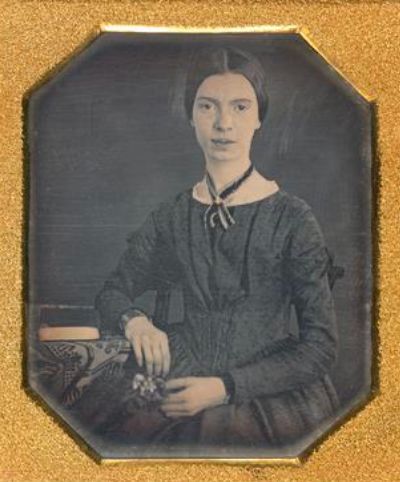
Figure 1: Emily Dickinson, Daguerreotype, ca. 1847. Amherst College Archives & Special Collections. Gift of Millicent Todd Bingham, 1956, 1956.002.4
So, what’s next for archivists in this situation? The SAA’s Core Values stress a need for collaboration, urging archivists to cultivate "opportunities... with any interested parties who wish to engage with archival records" (The Society of American Archivists, 2020). In the case of Emily Dickinson's manuscripts and artifacts, items were donated freely, but in regards to other donors such collaboration could have involved delicate negotiations. These negotiations could explore options like loaning the items, digital reproductions, or curated exhibitions, all while ensuring the owners' rightful claims are acknowledged and written contracts abided by. Harvard University Library's Houghton Library exemplifies a successful approach to preservation and access. Housing the world's largest Dickinson collection, including over 1,000 poems and 300 letters, Houghton's has undertaken a significant digitization project, making these materials accessible to a wider audience, benefitting everyone from casual visitors, poetry aficionados to scholars and researchers. While access to originals is limited due to their fragility, the library's expertise in preservation ensures their long-term security. This approach ethically safeguards these materials while broadening public access, something private ownership may not guarantee. Bennett writes, “It’s not necessarily the role of the librarian to determine what materials survive…but we do have a role in protecting and making available the materials in our care–and in advocating for records of cultural and historical value to be preserved. And what is considered to be of value changes over time” (Bennett, 2016).
Amherst College manages another significant collection of Dickinson artifacts, such as fascicles, letters, rough drafts and the original daguerreotype of Emily and her brother, Austin. The college purchased the Dickinson Homestead in 1965 and continues to restore and maintain the property while offering programs and tours to educate visitors about her life and works. One could argue that this has increased access and use to the Dickinson archives by enhancing public access and facilitating a site for scholarly research. For example, in writing her historical fiction novel, Emily’s House, author Amy Belding Brown frequented the homestead several times to bring her story to life (Belding Brown, 2021). While not all pieces of history can be restored to near likeness like the Dickinson Homestead, the preservation efforts made by Amherst College can be admired, if not envied.
Collaborative strategies that do not undermine the legal rights of owners consist of loan agreements, digital reproductions and, in some cases, tax incentives. Fortunately, in the case of Emily Dickinson’s materials, the daughter of David and Mabel Todd generously donated the items she inherited from her mother (Amherst College). While the possibility remains that additional manuscripts and artifacts exist outside established collections, whether knowingly or unknowingly held by descendants, neighbours, or friends of the Dickinson family, archivists can continue to encourage collaboration and responsible stewardship.
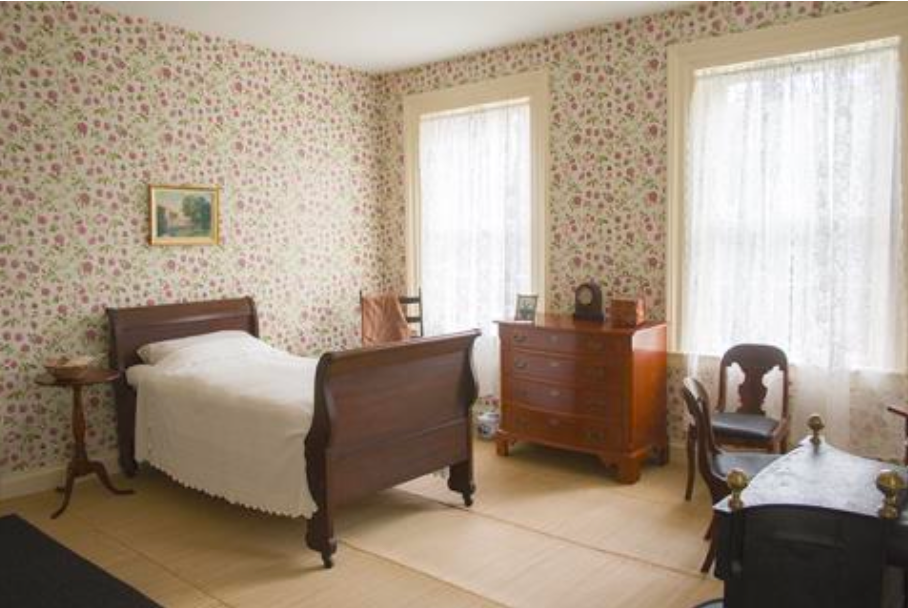
Figure 2: Emily's Room at the Homestead. Source: The Emily Dickinson Museum
At the end of the day, the miraculous dispersal of Emily Dickinson's literary estate among reputable institutions like Amherst College and Harvard University has ensured the long-term preservation and accessibility of a vast collection of American literary history. Archivists and historians have meticulously applied ethical principles and restoration techniques, safeguarding these materials for future generations. This commitment reflects the core values in the Archivists' Code of Ethics, promoting responsible stewardship and honouring the legacy of America’s great poet. While the possibility of additional Dickinson materials existing outside these institutions remains, the current holdings, expertly managed, continue to serve as a testament to the poet's enduring significance.
Works Cited
Amherst College. (n.d.). Emily Dickinson at Amherst College. Retrieved from Amherst College:
https://www.amherst.edu/library/archives/holdings/edickinson
Belding Brown, A. (2021, Aug 5). Getting to Know an Author Through Their Home. Retrieved from
LitHub: ttps://lithub.com/getting-to-know-an-author-through-their-home/
Bennett, K. D. (2016, December 10). Somewhere in an attic: the Emily Dickinson publishing
dilemma. Retrieved from OUPblog: https://blog.oup.com/2016/12/emily-dickinson-
publishing-dilemma/
Faue, E. (2008). Dickinson, Emily. The Oxford Encyclopedia Women in World History, Oxford
Reference.
The Morgan Library & Museum. (2017, May 28). I'm Nobody! Who are you? The Life and Poetry of
Emily Dickinson. Retrieved from The Morgan: https://www.themorgan.org/exhibitions/emily-
dickinson
The Society of American Archivists. (2005, Feb 5). Code of Ethics for Archivists. Retrieved from SAA:
https://www.wipo.int/export/sites/www/tk/en/databases/creative_heritage/docs/saa_ethics
_archivists.pdf
The Society of American Archivists. (2020, August). SAA Core Values Statement and Code of Ethics.
Retrieved from SAA.


