It's spooky season.
Emily Dickinson’s “Because I could not stop for Death” is arguably her most famous poem, and for good reason… it’s spooky, thoughtful, and strangely calm about the whole idea of dying. Instead of making Death terrifying, Dickinson imagines it as a polite carriage driver who swings by to pick her up for a ride into the unknown. Creepy? Yeah. Fascinating? Absolutely.
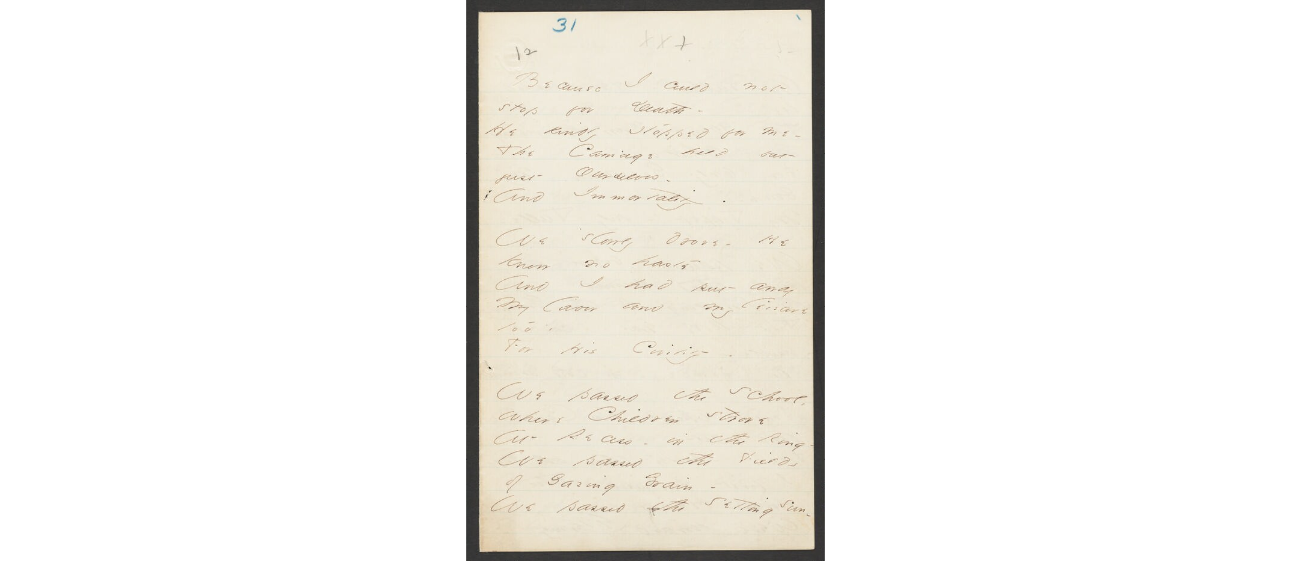
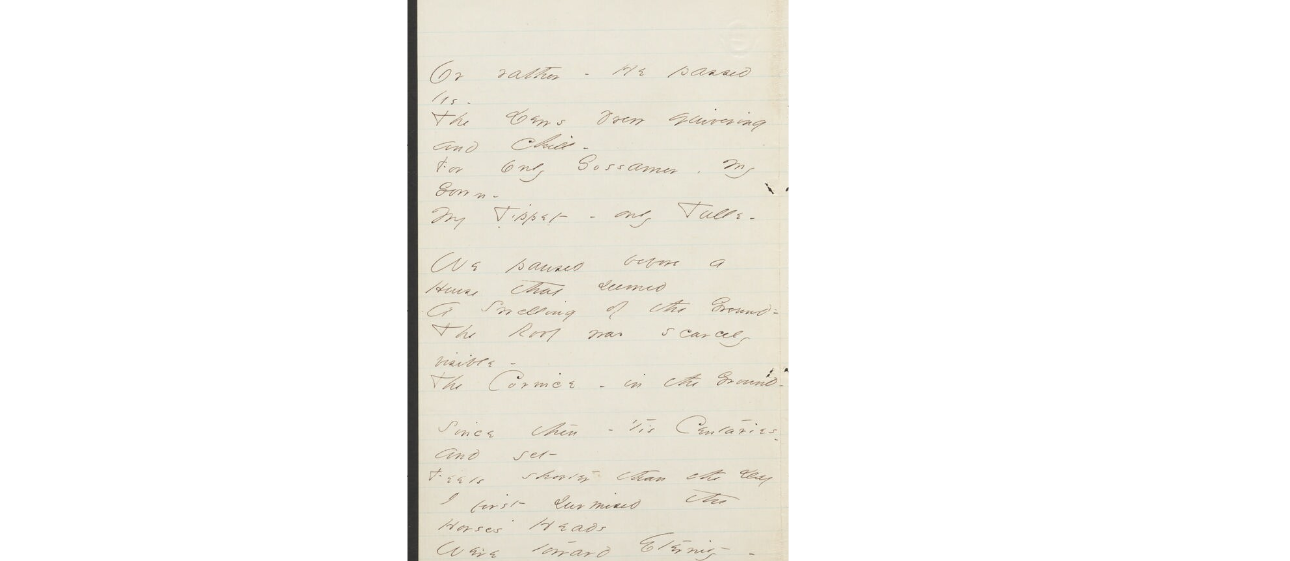
Figure 1 & 2: Original Emily Dickinson Manuscript. (https://www.edickinson.org/editions/1/image_sets/12174893)
I wanted to do a reflection on Emily for a personal reason—she’s actually my distant cousin! According to my genealogical research, my 11th great-grandmother, Mary Meekins (Belding), wife of Captain John Allis, who died in King Philip’s War in 1705 in Hatfield, Massachusetts, had a sister named Sarah. Then came love and romance, yada yada yada, and Sarah married a guy named Samuel Dickenson.
At first I thought, “Okay, so what?” But then I noticed the last name. Dickenson. During the early colonial days in Massachusetts, if you shared a surname, there was a good chance you were related somehow. So of course I thought:
Dickenson… like Emily Dickinson? Amherst and Hatfield weren’t far apart, and I knew my other distant cousin, Louisa May Alcott, had ties with Emily since both were groundbreaking female authors of their time. That sent me digging deeper. After a few hours of digital sleuthing through ancestral records, I made the connection. She’s family! (Sure, it’s a stretch—but holy crap, that means two famous female authors show up in our family tree! To say the least, it made my
literary-loving heart very, very happy.)
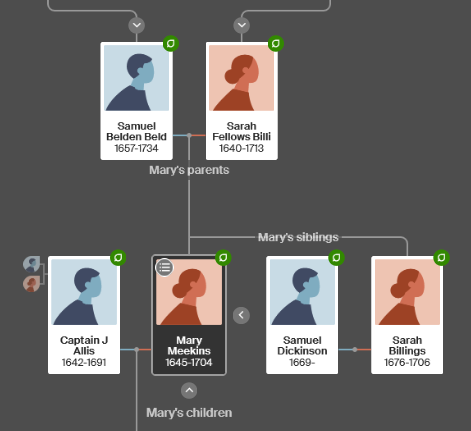
Figure 3: Snapshot of Du Preez Ancestry. (Priscilla Du Preez)
Born in 1830 and living much of her life in Amherst, Massachusetts, cousin Emily (hee hee) was known for being extremely private, but she wrote nearly 1,800 poems. A lot of her writing explores death, likely because she experienced so much loss in her family and community. In Gilbert P. Voigt’s analyzation of her inner life, he notes that between her strict religious upbringing and the political and cultural climate of 19th-century America, she ended up tackling some of the biggest, heaviest questions about life, faith, and what happens after we’re gone… questions you and I likely still wrestle with to this day.
Her fascination with mortality makes even more sense when you realize the world she grew up in. From my ancestral research, the Emily Dickinson Museum provides context around this time: the United States was in the middle of the Second Great Awakening, when debates about salvation and eternity were everywhere. On top of that, she literally lived next to a cemetery, attended countless funerals, and lost close relatives at a young age. For her, death wasn’t just a distant idea… it was a daily presence.
To further explore Emily's attraction to death and the spiritual realm, her relationship with these concepts is complex and marked by contradictions, reflecting a deeply mystical and individualistic faith. Gilbert P. Voigt describes Dickinson as simultaneously expressing doubt and deep faith, her moods shifting from seeing God as a "cruel enemy" to an "infinitely tender friend." She often portrayed a childlike trust in the divine, exemplified in her poem-like confessions: "Savior! I've no one else to tell / And so I trouble Thee," revealing a simple yet profound faith.
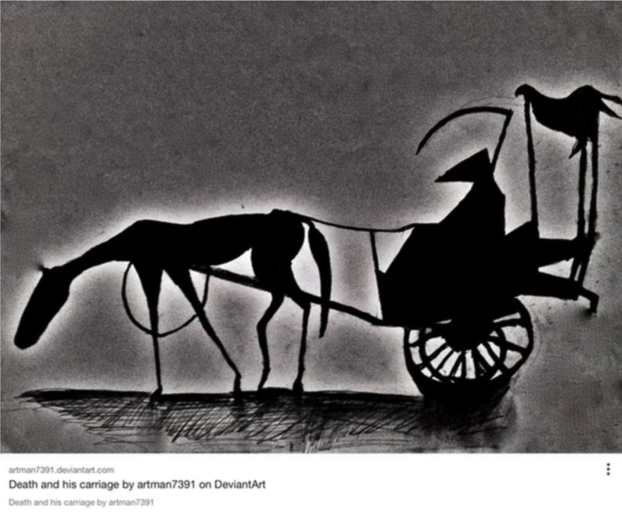
Figure 4: Artist rendering. (https://deathcafe.com/blog/222/)
Her mysticism involved intuitive knowledge of God, whom she felt present like a "next-door neighbour" or a "guest," and occasionally experienced visions of immortality and union with the divine, as in the metaphor of being a "Bride of the Father and the Son, / Bride of the Holy Ghost." Her spiritual view included a belief in the essential beauty and goodness of life despite its hardships, seeing suffering as a refining power "to bend the eye / Best beauty's way." Toward the end of her life, her thoughts turned increasingly to Heaven, which she imaginatively described as an infinite series of unexplored seas, symbolizing eternity. Despite rebelling against her Calvinistic upbringing, she retained a mystical Christian faith that was uniquely her own, rejecting established doctrines like original sin and embracing a vision of a joyful, beautiful existence suffused with God's presence and the promise of immortality.
Sometime between 1855 and 1863, she wrote “Because I could not stop for Death.” In it, she imagines Death not as a monster, but as a polite suitor who comes by carriage, bringing Immortality along for the ride. It’s both personal and universal: her own grief shows through, but it also reflects how often mortality surrounded her. The poem doesn’t shout “scary!”, rather it whispers “chilling” in a strangely calm way.
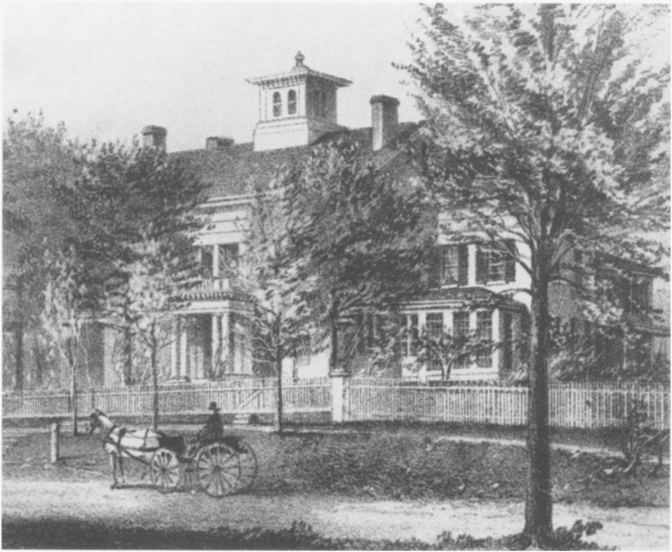
Figure 5: 1858 lithograph by Bachelder of the family homestead, which Edward Dickinson repurchased in April 1855 from Samuel Mack. (The Jones Library Special Collections, Amherst, MA)
What’s even more interesting is that Dickinson hardly published anything while she was alive. This poem only appeared after her death in 1890. The reason we can read it at all is thanks to her maid, Margaret Maher, who flat-out ignored Dickinson’s request to burn her manuscripts. Author-and-distant-cousin Amy Belding Brown has even written about their close bond, showing just how important Maggie was in saving Dickinson’s legacy for the rest of us.
Part of what makes the poem powerful is Dickinson’s unique style: her famous dashes, unusual capitalizations, and layered meanings. These quirks invite us to read and reread, thinking more deeply each time. Manierre notes that critics like Allen Tate have hailed the poem as one of the greatest ever written in English, though others like Yvor Winters, noted by Wilson, weren’t as convinced by the ending. Either way, her impact is undeniable. What do they say… even bad publicity is good publicity?
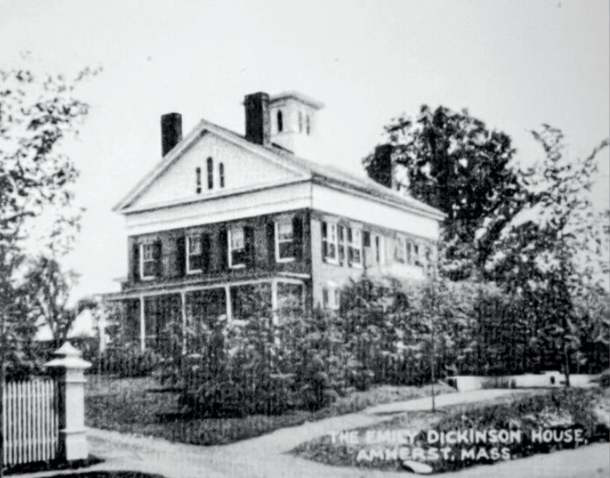
Figure 6: Greetings from the Homestead circa 1920! (The Jones Library Special Collections, Amherst, MA)
Since its first publication, “Because I could not stop for Death” has fascinated readers, teachers, and scholars alike. Early audiences praised how calmly Dickinson handled the idea of mortality, and later critics focused on her style and love of ambiguity. Today, it’s one of the most analyzed poems in classrooms and anthologies, still sparking new conversations more than a century later. And it hasn’t just stayed on the page. The poem has been set to music, inspired artwork, and quoted in more books and collections than you could count. Even AppleTV’s Gen-Z-inspired show Dickinson breathed new life into her words, proving that those haunting lines still echo through pop culture and classrooms alike. More than a century later, this quiet little poem is still speaking loud and clear.
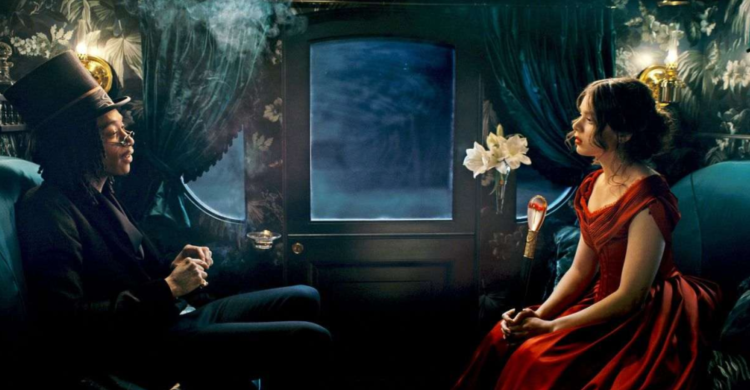
Figure 7: Wiz Khalifa as Death. (https://www.vulture.com/2019/09/wiz-khalifa-is-playing-death-in-applesdickinson.html)
WORKS CITED
Anderson, Douglas. “Presence and Place in Emily Dickinson’s
Poetry.” The New England Quarterly, vol. 57, no. 2, 1984, pp. 205–24. JSTOR, https://doi.org/10.2307/364993. Accessed 2 Oct. 2025.
Brown, Amy Belding. Emily's House. Berkley, 2021.
“Emily Dickinson and the Civil War.” Emily Dickinson Museum,
www.emilydickinsonmuseum.org/emily-dickinson/biography/special-topics/emily-dickinson-and-the-civil-war/. Accessed 2 Oct. 2025.
Lambert, Eleanore Lewis. “Emily Dickinson’s Joke about Death.” Studies in American
Humor, no. 27, 2013, pp. 7–32. JSTOR, http://www.jstor.org/stable/23823978. Accessed 2 Oct. 2025.
Manierre, William R. “E. D.: Visions and Revisions.” Texas Studies in Literature and
Language, vol. 5, no. 1, 1963, pp. 5–16. JSTOR, http://www.jstor.org/stable/40753621. Accessed 3 Oct. 2025.
McNaughton, Ruth Flanders. “Emily Dickinson on Death.” Prairie Schooner, vol. 23, no. 2,
1949, pp. 203–14. JSTOR, http://www.jstor.org/stable/40624107. Accessed 3 Oct. 2025.
Voigt, Gilbert P. “The Inner Life of Emily Dickinson.” College English, vol. 3, no. 2, 1941, pp.
192–96. JSTOR, https://doi.org/10.2307/370816. Accessed 3 Oct. 2025.
Wilson, James Matthew. “Representing the Limits of Judgment: Yvor Winters, Emily
Dickinson, and Religious Experience.” Christianity and Literature, vol. 56, no. 3, 2007, pp. 397–422. JSTOR, http://www.jstor.org/stable/44314074. Accessed 3 Oct. 2025.


